
The cricket landscape is shifting by the hour and nowhere is the tension more palpable than in the Ashes Series and International Cricket Updates. From the treatment table to the nets, the storylines running from Adelaide to Cuttack and Wellington are a reminder that momentum in this sport is fragile, form is a moving target and resilience is the currency that matters most.
Australia count on Pat Cummins as Josh Hazlewood sits out
Australia have taken a decisive step toward wrapping up the Ashes in Adelaide with the return of captain Pat Cummins to a 15 man squad, even as the heartbreak of Josh Hazlewood’s withdrawal lingers. Coach Andrew McDonald confirmed Hazlewood suffered recovery setbacks with hamstring and Achilles issues and will miss the rest of the series, a sobering blow for a group that had pencilled him in for a major role.
McDonald described his veteran quick’s fate with plain honesty. He said he was really flat for him, that a couple of setbacks had come that they did not see coming. He stressed that Hazlewood was expected to play a huge part and that they really felt for him that he would not get that opportunity. The silver lining for Australia is clear, Cummins completed a match like workload in training and the staff believe he will be as best prepared as can be. For a side already 2-0 up, the timing feels critical.
Selection questions now narrow to sharp edges. Mitchell Starc, the leading wicket taker in the series with 18, is fit after a left side niggle and is locked in. If Cummins plays, only one among Scott Boland, Michael Neser and Brendan Doggett is likely to accompany Starc. Nathan Lyon, who boasts 562 Test wickets, is likely to return after the Gabba where Australia went with an all seam attack, a rare call at home.
Batting also invites debate. Usman Khawaja missed the second Test with a back issue but remains in the squad. In Brisbane, Josh Inglis replaced him in the team yet batted in the middle order while Travis Head moved up to open alongside Jake Weatherald. McDonald did not rule out a fit again Khawaja sliding down the order on a surface specific call, a nod to flexibility that could be decisive in Adelaide.
Context frames the stakes. Australia posted 511 in reply to England’s 334 at the Gabba, then sealed an eight wicket win to go two up. They need only a draw in the third Test beginning 17 December in Adelaide to retain the urn. The plan is simple, regain their captain, preserve their fast bowling depth and keep squeezing an inexperienced England attack that has been under pressure for long stretches.
England absorb a fresh hit as Mark Wood heads home
England’s hopes of a momentum swing have taken a hit with Mark Wood ruled out of the rest of the Ashes after a recurrence of a left knee injury suffered in Perth. He will return home to begin rehabilitation, another veteran voice removed from a young attack that was made to toil in Brisbane.
Surrey seamer Matthew Fisher has been added to the squad and will link up this week after time with the England Lions. At the Gabba, England leaned on Jofra Archer, Brydon Carse and Gus Atkinson with Ben Stokes offering a fourth seam option and Will Jacks providing part time spin. The execution did not match the intent, Australia’s lower order blunted the visitors for long spells and stretched the game out of reach.
There is no panic, yet the margins are thin. Australia’s 2-0 lead means the pressure sits squarely on England to force the issue in Adelaide. The absence of Wood’s pace and experience hurts, and it shifts more responsibility onto Archer’s spells and Stokes’s game sense. The addition of Fisher offers another seam option, but the task remains steep against a batting group that found its rhythm at the Gabba.
India’s T20 plans lifted as Shubman Gill and Hardik Pandya prove fitness
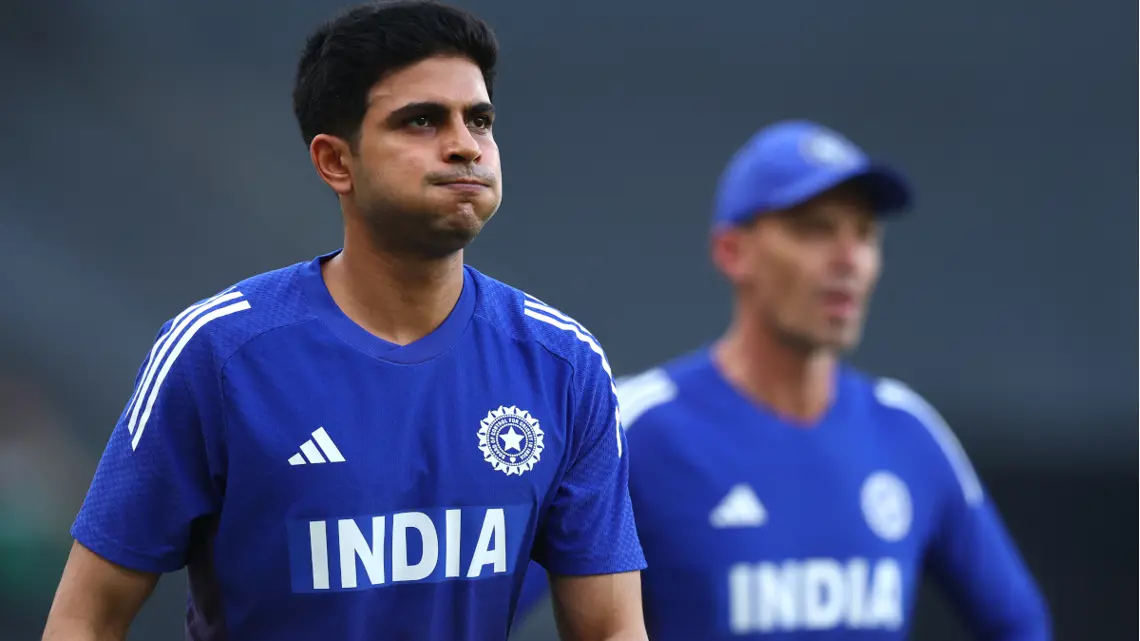
In Cuttack the mood is upbeat for India’s T20 series opener against South Africa with captain Suryakumar Yadav confirming that Shubman Gill and Hardik Pandya are fit and available. Gill is back after a neck injury suffered in the opening Test against the Proteas, while Pandya has recovered from a quadriceps issue picked up in September. The return of two first choice names adds class and balance.
Suryakumar underlined the value of Pandya’s flexibility. He noted that when Pandya took the new ball in the Asia Cup he opened up a lot of options and combinations in the playing eleven. He highlighted the allrounder’s big game record, stating that his experience will count a lot and that his presence gives a good balance to the side. It is exactly the kind of multidimensional skill set that allows India to shape game plans to surface and opponent.
Selection intrigue sits in the middle order. With Gill back up top, wicketkeeper batter Sanju Samson and Jitesh Sharma are locked in a friendly fight for a place. Suryakumar praised Samson’s willingness to bat anywhere and suggested that both are in the scheme of things, both can do all the roles. For a captain who values adaptability, this is a good headache to have and a test of finishing skills under pressure.
The stage is set in Odisha, with first ball at 3.30 pm on Tuesday. India’s staff will be watching fitness loads closely yet the tone is positive, the depth is real and the chance to cement roles ahead of a busy February is meaningful. For Gill it is a return to rhythm after an untimely neck issue. For Pandya it is a chance to sharpen both disciplines and restore that familiar new ball threat.
Proteas turn to David Miller as depth battle intensifies
Across the aisle the Proteas have welcomed back David Miller for the India T20s, a seasoned finisher eager to prove he still belongs at the heart of the plan. At 36, Miller admitted it has been a while and that it is great to be back, that watching the group made him want to be there. He spoke openly about time away to heal a hamstring niggle, to reflect and to get his body right, and he said he feels strong and fit and ready to go.
Competition for batting places is fierce with Dewald Brevis re emerging and the likes of Lhuan dre Pretorius and Matthew Breetzke scoring big runs, while Quinton de Kock has returned from retirement. Miller called it a big pool of players putting up hands and acknowledged that selection for the next global tournament will be tough. He also stressed the group is in a good space, that there are world class players, and that he hopes to contribute where he can.
South Africa’s short term calendar adds edge. The India series is followed by the SA20, and then the T20 World Cup in India and Sri Lanka starts on 7 February 2026. For Miller and his rivals this is a race against the calendar, a sequence of auditions in different conditions that will test range, temperament and fitness. The Proteas will want a strong response after losing the ODI series 2-1, even as they take confidence from a 2-0 success in the Tests.
New Zealand’s patched up attack bites back in Wellington
In Wellington a threadbare New Zealand seam group found steel on the opening day. After injuries to Nathan Smith and Matt Henry in Christchurch and with Kyle Jamieson unavailable, the Black Caps drafted in uncapped quicks Michael Rae and Kristian Clarke, then named debutants Rae and wicketkeeper Mitchell Hay for the second Test. Glenn Phillips also returned to the squad after a groin issue, another useful string for balance.
On day one at the Basin Reserve, Tom Latham won the toss and chose to bowl and his seamers repaid the trust. The West Indies were dismissed for 205 in 75 overs, then New Zealand reached 24 without loss at stumps with Latham 7 not out and Devon Conway 16 not out. It was efficient cricket, backed by discipline in length and a calm reading of a pitch that offered enough without being unplayable.
Blair Tickner was the pick with 4 for 32 from 16 overs, his day equal parts impact and concern. He caused problems with an accurate line and length, then left the field after tumbling on a shoulder while fielding. Medical staff from both teams rushed to assist, Tickner eventually sat up and was taken by ambulance, and New Zealand Cricket confirmed a left shoulder injury. Debutant Rae offered strong support, claiming 3 for 67 from 18 overs, a worthy first day return.
The visitors began brightly at 66 without loss in little more than an hour before New Zealand found a way to squeeze. John Campbell’s 44 was lively, Shai Hope compiled 48 from 80 with eight fours and Brandon King added 33, yet the middle and lower order could not sustain the platform. After reaching 175 for 4 at tea, the West Indies lost six wickets for 30 runs, a collapse that left the door open for a commanding New Zealand reply.
Mitch Hay spoke after his first day in Test whites and his words matched the images. He said it was awful to see Tickner hurt and that everyone was feeling for him. He added that tomorrow they would aim to post a big lead, that the pitch has something on offer and that the plan is to cash in early. For a debutant, it was composed sentiment, the kind that settles a dressing room on a day charged with emotion.
The West Indies made enforced changes as well. Tagenarine Chanderpaul was injured in training and replaced by King at the top, Kavem Hodge came in for Alick Athanaze and Anderson Phillip replaced Johann Layne. The Basin Reserve history book revealed a curious nugget, this was the 18th successive time a captain inserted the opposition at the venue, a trend New Zealand trusted and validated with discipline and patience.
What the draw in Christchurch still means for the tourists
The opening Test in Christchurch ended in a stirring draw that has given the West Indies a foothold in this World Test Championship cycle. Justin Greaves carved an epic unbeaten 202 as they closed at 457 for 6 chasing 531, the second highest fourth innings total in Test history. Those runs were hard won and emotionally huge, a reminder that belief can travel well even in hard places.
Context in Wellington is timely. The West Indies had arrived seeking first points after a rough start that included a 3-0 sweep by Australia in July and a 2-0 loss to India. Their last win in New Zealand was at the Basin Reserve in 1995, a different era with Curtly Ambrose and Courtney Walsh, but the present day group has already shown bite. Kemar Roach, 37 and indefatigable, produced seven wickets and an unbeaten 58 in Christchurch to help save the match, a veteran setting standards for a young squad.
Why these updates matter right now
Australia’s equation is clear and ruthless, regain their captain, leverage Starc’s surge, and let Lyon’s control frame the game, England’s challenge is to find penetration without Wood, to trust Archer’s spells and Stokes’s feel, and to hold catches when the tail wags, India’s lift arrives in the form of Gill’s timing and Pandya’s allround elasticity, a pairing that stabilises the top and unlocks depth for the death overs.
The Proteas are using this India tour as a live selection lab, Miller’s experience sits alongside the exuberance of Brevis and the runs of Breetzke and Pretorius, which raises the standard daily. New Zealand’s youngsters have been asked to grow up quickly and, on day one in Wellington, they responded with skill and heart. For the West Indies, the memory of Christchurch is a lever that must pry open composure in the middle sessions where this Test often turns.
Key takeaways
- Pat Cummins returns to Australia’s squad while Josh Hazlewood is ruled out,
- England lose Mark Wood and add Matthew Fisher as Adelaide beckons,
- India welcome Shubman Gill and Hardik Pandya for the Cuttack T20 opener.
What to watch next
All eyes now turn to Adelaide on 17 December where Australia can retain the urn with a draw, and where England must summon clarity in selection and conviction with the ball. Cummins’s rhythm, Starc’s left arm angle and Lyon’s bounce will shape the home attack. England’s response hinges on discipline, patience and seizing half chances that mattered so much at the Gabba.
In India the first T20 in Cuttack presents a platform for Gill to resume at the top and for Pandya to test overs with the new ball and overs at the death. The Samson and Jitesh Sharma conversation will draw strong opinions, but the bigger theme is India’s bench strength and tactical flexibility under Suryakumar.
Back in Wellington, New Zealand will want to build a first innings lead that can protect a possibly reduced seam unit if Tickner’s shoulder rules him out of further bowling. The West Indies must bat with the stubbornness they showed in Christchurch, limit soft dismissals and cash in on anything full. The third and final Test of the series begins on 18 December in Mount Maunganui, so the runway from the Basin is short and unforgiving.
Cricket’s grand tour moves quickly, yet the human strands endure. A captain returns from a back injury, a senior quick watches a series from the sidelines and recalibrates for February, a debutant steadies a side with a few words after a teammate is carried off, and a veteran batter chases one more World Cup with a smile and a promise to help where he can. It is why these weeks matter and why the next ball always feels like the most important one.