
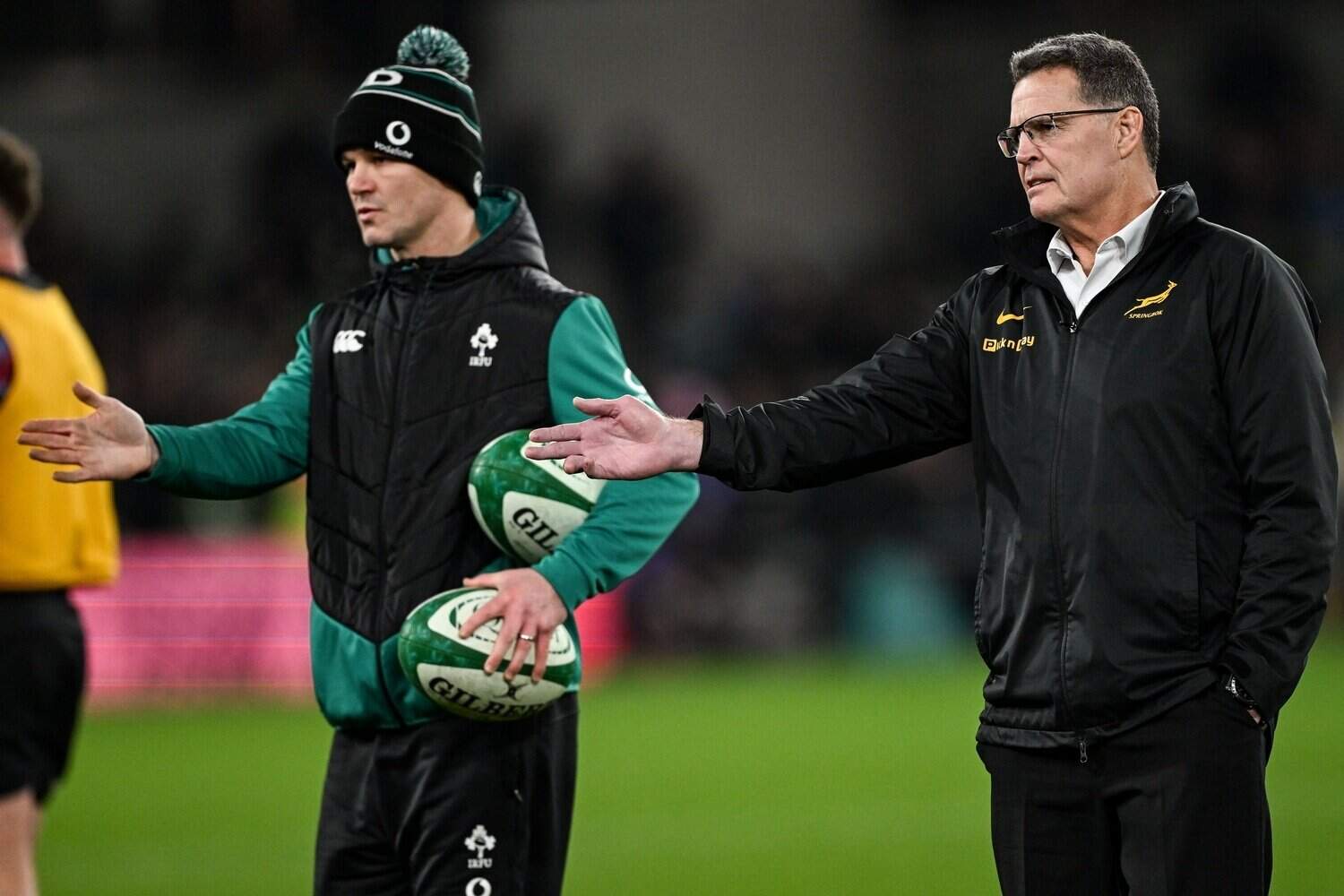
South Africa vs Ireland rugby match in November lit up Dublin as the Springboks ground out a 24-13 win at the Aviva Stadium, their first triumph in the Irish capital since 2012. It was a stop-start epic that stretched beyond two hours, heavy on cards and heavier on collisions, with the world champions leaning into their set-piece might to finally get the result that had eluded this group for over a decade.
The hoodoo ends in Dublin
Rassie Erasmus had warned it would take a colossal effort to beat Ireland at home, and he was right. The Boks had lost their previous three in Dublin, while Ireland had won four of the last five between the sides, yet this time the visitors imposed their will early, then lived with the turbulence that followed.
Afterward, Erasmus spoke of relief more than revenge, the emotion of a long pursuit giving way to a clear-eyed assessment of a rivalry that has sharpened with each meeting.
It was definitely not a perfect performance, but there was a monkey on our backs that we had to get off
said Erasmus, a nod to the significance of this win for a champion side that had conquered everywhere else.
Scrum power shapes the narrative
The match’s central theme was unmistakable, the Springbok scrum squeezed Ireland until the game bent in green and gold’s favor. South Africa won all 16 of their scrums and earned six scrum penalties, a relentless drumbeat that forced Irish props Andrew Porter and Paddy McCarthy into yellow cards and eventually delivered a penalty try.
Boan Venter, Malcolm Marx and Thomas du Toit set the foundation, then Gerhard Steenekamp and Wilco Louw maintained the pressure when they arrived just before halftime. Rassie Erasmus explained the decision to keep the foot on the set-piece pedal, admitting the Boks could have taken easy points but chose to roll the dice because of their dominance and Ireland’s temporary numerical setbacks.
Cards everywhere, composure required
Referee Matthew Carley faced a thicket of big calls and handled them with composure under intense pressure. Ireland lock James Ryan was initially yellow carded for a reckless shoulder charge at a ruck on Marx, and that sanction was upgraded to a 20-minute red by the bunker, a pivotal moment on a night when rhythm was constantly interrupted.
The tally mounted as repeated infringements led to further punishment, Sam Prendergast and Jack Crowley were binned for team and cynical offences respectively, with Porter and McCarthy also sent to the sin bin for scrum transgressions. Grant Williams saw yellow late for South Africa, while Tommy O’Brien’s high contact with Canan Moodie was adjudged a penalty only, and an earlier Sacha Feinberg-Mngomezulu tackle review landed as a penalty after checks showed mitigating factors.
Clinical edge versus Irish resilience
If the scrum was decisive, the scoreboard still felt tight because Ireland’s goal-line defense was unflinchingly fierce. Time and again in their own 22, the hosts counter-rucked, jackalled and forced turnovers, denying the Springboks when momentum screamed for a finish.
South Africa created a stack of entries and prolonged pressure, yet the game remained within two scores into the closing minutes. Ireland’s resilience meant that even when they dropped to 12 men during a chaotic spell, they found a way to stay alive through grit, structure and sheer defiance at the try line.
How the points came
Four Springbok tries told their story, Damian Willemse dotted down after a sweeping movement from a line-out on halfway, Cobus Reinach sniped to score after sharp awareness at the ruck, Sacha Feinberg-Mngomezulu sliced through for a fine solo effort, and the scrum’s supremacy forced a penalty try.
- Damian Willemse found the corner after a flowing attack,
- Cobus Reinach took his chance close in,
- Sacha Feinberg-Mngomezulu produced a statement run,
- the penalty try arrived off another dominant set-piece.
For Ireland, hooker Dan Sheehan’s finish kept the contest in the balance and Sam Prendergast’s penalty added further pressure. Even with the pack under duress, Ireland’s accuracy near their own line repeatedly shut the door until the dying phases.
Front-row mastery sets the tone
Thomas du Toit was immense, his scrum work against Porter created the early squeeze before Venter started to work over Tadhg Furlong. When the Bomb Squad arrived, the pressure deepened, Steenekamp and Louw immediately drew more penalties and the penalty try felt inevitable rather than opportunistic.
Marx, who has been crowned World Rugby Men’s 15s Player of the Year, was a tower of intent, his line-out throwing largely on point and his presence central to the physical tone. Siya Kolisi and Pieter-Steph du Toit added steel in the collision and the air, with Ruan Nortje heavily involved as the primary receiver and line-out leader.
Backline beats and mixed notes
Damian Willemse was assured under the high ball and busy on kick chase, a constant countering threat who also finished with class in the corner. Canan Moodie, restored to the wing, was athletically dominant in the air and tidy in defense, while Jesse Kriel and Damian de Allende punched valuable holes and absorbed contact through the middle third.
Sacha Feinberg-Mngomezulu, backed again at flyhalf, experienced some rough edges with his kicking from hand but found the spark for a superb try, a reminder of why Erasmus is entrusting him in heavyweight away Tests. Cobus Reinach balanced tempo and territorial management, blending a few average kicks with a sharp eye around the breakdown.
Reflections from the Bok camp
Erasmus and Kolisi were unanimous on one point, the scrum was the platform and scrum coach Daan Human deserved the plaudits. Erasmus framed the set-piece focus as a calculated choice based on what the game was giving them, especially with Ireland down men and struggling to stabilize the front row.
Kolisi added the human touch, calling it important for this group to finally win in Dublin and acknowledging that the Boks made it hard by failing to cash in during periods of numerical superiority. The captain’s pride in the forwards’ work rate was matched by a recognition that there is more to sharpen before Cardiff.
The Irish evolution and a coach’s insight
Felix Jones, once of Ireland and now a Springbok assistant, credited decades of Irish investment in schools and academy structures for their sustained excellence. He pointed to a coaching lineage from Declan Kidney to Joe Schmidt to Andy Farrell, with attack coach Andrew Goodman adding fresh ideas to a system that consistently produces test-ready talent.
On the eve of this Test he had also acknowledged the disruption around Springbok locks Lood de Jager and Franco Mostert due to recent hearings, a subplot that the wider squad absorbed with professionalism. Jones’s perspective sharpened appreciation for why Ireland stayed so competitive, even when undermanned and under siege.
The pivotal moments and officiating lens
Big matches hinge on big decisions, and Carley’s handling of several flashpoints kept a volatile contest under control. The bunker upgrade on James Ryan’s ruck entry was decisive, and the tightrope between mitigation and sanction on other contacts was navigated with a steady hand.
There was late drama when a Bok celebration of a knock-on drew a penalty that offered Ireland one more chance, further lengthening an already exhaustive evening. Ultimately the balance of calls aligned with the tone of a fiercely physical Test where both sides flirted with the edges of the law.
Player snapshots that mattered
Thomas du Toit drew a standout review for his scrum ascendancy and defensive bite, a tone setter from the first whistle. Malcolm Marx’s work rate and accuracy fortified both set piece and contact contest, while Nortje’s authority in the line-out kept the platform clean against accomplished opposition.
Off the bench, RG Snyman’s offloads added rhythm, Kwagga Smith hunted turnovers and carried with ferocity, and the reserve props sustained the squeeze that broke Ireland’s back. Andre Esterhuizen even filled in on the flank to help maintain pressure, a reflection of the Springboks’ adaptable mindset on a turbulent night.
Tactical trends and what we learned
South Africa’s willingness to bank territory and re-attack through scrum and line-out was both a strength and a warning signal. When the dam wall did not burst, scoreboard pressure lagged behind field position, a reminder that composure in the red zone matters as much as dominance in the set piece.
Ireland’s attack showed familiar shape with new faces adding a different flavor, as Jones suggested, and their defensive identity inside the 22 was remarkably persistent. South Africa’s flyhalf trust in Feinberg-Mngomezulu continues to grow, and his blend of physicality and playmaking will remain central as the tour closes.
The numbers behind the win
South Africa won all 16 scrums, banked six scrum penalties and scored four tries. Ireland conceded one red card that sat at 20 minutes, and six yellow cards were shown across the contest, a reflection of repeated infringements and the ferocity of collisions in a match that ran well over two hours.
The Boks controlled territory and possession for long spells, yet the final margin was still only 11 points heading into the last ten minutes. That tension underscored both what South Africa did well and what they did not do often enough, finishing movements in a game throttled by stoppages.
Rivalry renewed, respect reinforced
There was nothing hollow about the handshake at full time. The Boks had finally won in Dublin again, and Ireland had again shown why their recent rise is no accident, the fruit of structures, coaching and a hardened playing group that refuses to bow at home.
Erasmus summed it up neatly, dominant in many areas, yet still a kick or a moment away from a real scare late on. That is Test rugby, especially between two sides who now understand that every meeting is a referendum on standards.
What comes next for the Springboks
South Africa remain unbeaten on their northern tour after wins against Japan, France and Italy, before this latest success in Dublin. Wales await in Cardiff next weekend, another physical assignment with different questions to answer in contact and field position.
It has been a stellar year, 12 wins in 14 including the Barbarians match, with defeats only to the All Blacks and Wallabies during a triumphant Rugby Championship campaign. Malcolm Marx capped that broader story with World Rugby’s top individual award, a golden thread that runs through a season built on set-piece clarity, defensive resolve and a willingness to embrace hard moments.
The last word
This felt like a milestone more than a masterpiece. The scoreboard reads 24-13 and the hoodoo is gone, but the real value lies in the lessons baked into a night of scrums, cards and pressure. If the Springboks add sharper conversion to their territorial squeeze, they will not only win in difficult places, they will close the door before the final minutes.
For Ireland, the defensive steel that held the line against the odds will travel, along with the knowledge that their set-piece, normally a fortress, must recalibrate after a bruising examination. The rivalry is stronger for it, and so is the sport, because when these two collide the margins bruise and the standards rise.
Match essentials
- Venue, Aviva Stadium, Dublin
- Result, South Africa 24 Ireland 13
- Springbok tries, Damian Willemse, Cobus Reinach, Sacha Feinberg-Mngomezulu, penalty try.
Selected squads
Ireland, Mack Hansen, Tommy O’Brien, Garry Ringrose, Bundee Aki, James Lowe, Sam Prendergast, Jamison Gibson-Park, Caelan Doris captain, Josh van der Flier, Ryan Baird, Tadhg Beirne, James Ryan, Tadhg Furlong, Dan Sheehan, Andrew Porter. Bench, Ronan Kelleher, Paddy McCarthy, Finlay Bealham, Cian Prendergast, Jack Conan, Craig Casey, Jack Crowley, Tom Farrell.
South Africa, Damian Willemse, Canan Moodie, Jesse Kriel, Damian de Allende, Cheslin Kolbe, Sacha Feinberg-Mngomezulu, Cobus Reinach, Jasper Wiese, Pieter-Steph du Toit, Siya Kolisi captain, Ruan Nortje, Eben Etzebeth, Thomas du Toit, Malcolm Marx, Boan Venter. Bench, Johan Grobbelaar, Gerhard Steenekamp, Wilco Louw, RG Snyman, Kwagga Smith, Andre Esterhuizen, Grant Williams, Manie Libbok.